What is AI project management?
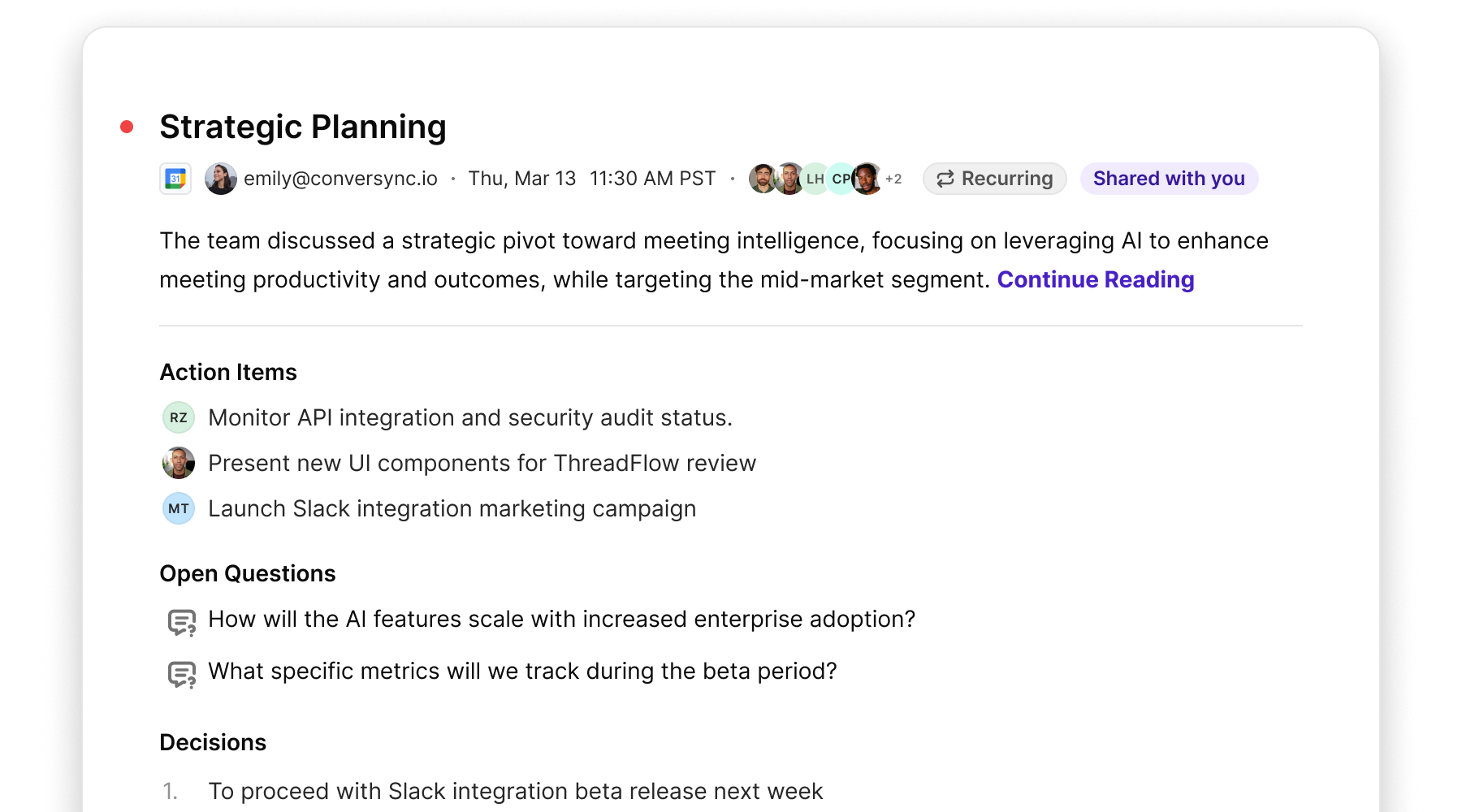
AI project management is software that uses AI to create and maintain a project plan — status, risks, actions and decisions — rather than only reporting on a plan people maintain by hand. Most solutions read an existing plan. A smaller number derive the plan itself from the meetings, tickets and documents a team already produces.
Can AI write a project plan?
Yes, if it has access to the evidence. Empwr builds the plan from your team's meetings, tickets and documents, deriving the timeline, decisions, risks and actions across the tools you already use, without anyone entering tasks first. None of the major project tools does this — their AI reads a plan a person maintains. Microsoft's Planner agent, for example, needs a plan shared to a Microsoft 365 Group with at least ten tasks before it will produce a status report.
Can AI replace a project manager?
The assembling can be automated — chasing updates, reconciling tickets, writing the status report. The judgment can't: what to escalate, whose problem to solve first, when to change the plan. Where a PMO or a dedicated project manager exists, that person spends their time on problems instead of reports. Where nobody owns the program, nobody has to become a project manager to get a status the team can trust.
What is the difference between an AI notetaker and AI project management?
An AI notetaker summarises a meeting and stops. AI project management starts with the project and carries what was decided into the project plan, connects it to the tickets and documents it affects, and keeps the picture current between meetings. The test is whether the output changes when the project changes, or only when someone holds another meeting.
What is Empwr?
Empwr is AI project management for teams running cross-functional programs. It builds and maintains the project plan from your team's meetings, tickets and documents, so the status reflects what actually happened rather than what someone remembered to type. Every claim links back to the meeting, ticket or document it came from.
How does Empwr build a project plan without anyone entering data?
It reads the evidence the program already produces. Empwr sits in the meetings you point it at, watches the connected tickets, and reads the documents and threads, then derives the timeline, decisions, risks and actions from what it finds. There is no plan to populate and no tasks to create first — the plan is the output, not the input.
What tools does Empwr work with?
Empwr connects to the tools a program already runs on: Zoom, Google Meet and Microsoft Teams for meetings, Slack for conversations, Google Calendar and Outlook for scheduling, Jira, Linear, Asana, Monday.com and GitHub for work in flight, and Google Docs, SharePoint, Notion and Confluence for documents. Custom toolsets can be connected on request. Empwr reads across all of them rather than requiring your program to live inside one vendor's suite.
How does Empwr work with my other AI tools?
Empwr is not an either/or with Claude, ChatGPT or Microsoft Copilot — it works best alongside them. Those assistants reason well over whatever you hand them; Empwr is what keeps an accurate, current picture of the program for them to reason over. Empwr exposes its project data through an MCP server, so your assistant can ask what is at risk, what was decided and what is late, and answer from the evidence rather than from whatever was pasted into the chat.
Who is Empwr for?
Teams running cross-functional programs where work is tracked across three or more tools no single vendor owns, decisions get made in recurring meetings not everyone can attend, and nobody can keep the picture current in between. Often that job lands on an accidental project manager — an engineer, product manager or chief of staff who never set out to run the program but ends up chasing status anyway. A dedicated PMO hits the same problem from the other direction. The shape of the work matters more than the job title.
Does Empwr train AI models on customer data?
No. Your sensitive information is not used to train AI models. Empwr holds a SOC 2 Type 2 attestation, Security / Common Criteria scope, and the same protections apply to every customer regardless of company size or subscription tier.
What if Empwr flags something that isn't real?
Every flag links back to the meeting, ticket or document it came from, so you can check it in one click and disagree with it. You can also add context at any time — correct a wrong assumption, note that something is already handled, explain what the evidence doesn't show — and Empwr takes it into account from then on. Status derived from evidence is arguable in a way that status written by a person isn't, which is the point. Raising a risk stops costing anyone political capital.